
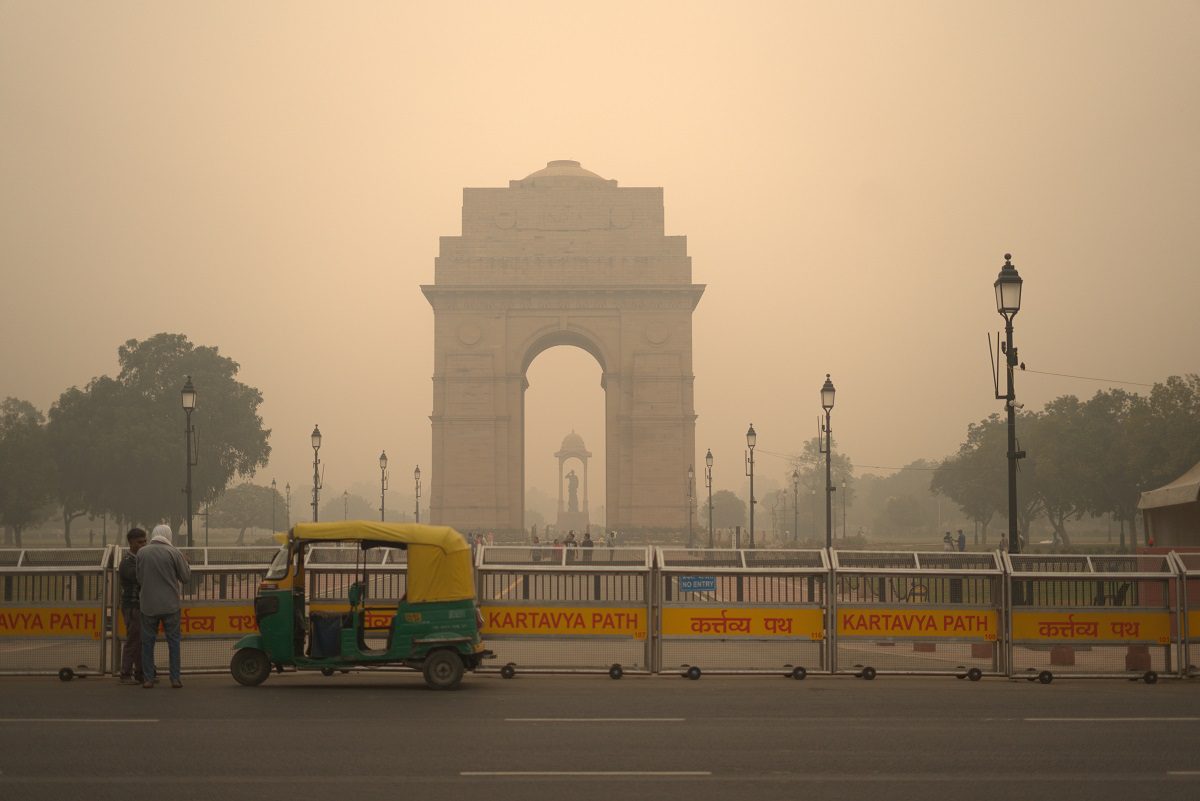
Every November, Delhi wakes to a choking reality. The city turns into a gas chamber. The Delhi Air Quality Index (AQI) drops into the “severe” zone. It crosses 450. Sometimes it touches 500 or more.
Schools shut. Hospitals overflow. Flights delay.
The capital of India becomes one of the world’s most polluted cities. This is not a temporary crisis. It is an annual disaster.
Why does Delhi air pollution return every winter? Why has this become routine instead of an emergency?
This is not a rant.
It is a critical, fact-driven look at a city that is losing its breath.
Life Inside Delhi’s Toxic Air
In a South Delhi children’s hospital, cases spike every November. A paediatric pulmonologist confirms a 30% rise in breathing issues.
Infants struggle. Toddlers wheeze. Teenagers feel chest tightness.
Parents report burning eyes, coughing, and poor sleep.
Masks return, not because of a virus, but because of the air. Teachers watch students lose focus inside polluted classrooms. A government-school teacher says, “We shift online every November. Children lose valuable learning time.”
Working professionals face headaches and fatigue. Outdoor workers breathe the worst air with no protection.
Delhi’s pollution is not an inconvenience.
It is a direct attack on public health.
Why Delhi Air Pollution Returns Every Year
Residents already know the causes:
- Stubble burning in Punjab and Haryana
- Vehicular emissions
- Construction dust
- Industrial pollution from NCR
- Winter inversion layers trapping smog
The science is clear.
The governance is not.
Other cities proved improvement is possible. Beijing cleaned its air. London cut emissions. Seoul enforced monitoring.
Delhi repeats the same cycle:
- Panic in November
- Temporary restrictions
- Silence by January
Why is there no long-term clean air plan?
Short-Term Measures That Don’t Work
Every year brings the same actions:
- Odd-even rule
- Construction bans
- Water-sprinkling trucks
- GRAP warnings
- School closures
These actions look strong. But they fail to solve anything permanently. Odd-even barely reduces emissions. Water spraying works for hours, not days. Construction continues in hidden pockets.
An office worker says, “Schools close, but offices don’t. Factories don’t. Only children suffer.”
These measures avoid hard decisions. They lack long-term vision.
Stubble Burning Is Not the Only Culprit
Farm fires increase Delhi’s AQI by up to 40%. But farmers burn due to limited time and costly machines.
The real questions:
Why are crop incentives still broken, diversification ignored and clean alternatives unavailable at scale?
Blaming farmers is easy but fixing agricultural policy is not.
Vehicular Emissions Are Choking the City
Delhi has over 1.3 crore registered vehicles and more enter daily from NCR. Public transport still fails to meet demand. Many areas lack safe and reliable options. As a result:
- Private vehicles increase
- Ride-sharing increases traffic
- Roads expand, but congestion grows
- More roads bring more cars.
- More cars bring more pollution.
Construction Dust and Industrial Pollution
Construction never stops across Delhi-NCR. Dust-control rules exist. Enforcement fails. Open debris. Uncovered sites. Leaking trucks. Industrial zones release constant emissions.
A senior doctor says, “Pollution is year-round. Winter only exposes it.”
If laws exist but are ignored, how can air ever improve?
Environmental Inequality: Who Suffers Most?
Air pollution does not affect everyone equally. The worst-hit groups:
- Daily wage workers
- Construction labourers
- Delivery workers
- Traffic police
- Children in low-income areas
A worker in Dwarka says, “Mask won’t put food on the table. I must work.” Clean air has become a privilege, only the wealthy can avoid it. But clean air is a right.
A Crisis With No Accountability
State and central governments blame each other. Agencies work in isolation. Responsibility is split. There is no unified clean air authority with real power. There is no year-round cooperation. Until accountability becomes clear, Delhi will stay trapped in toxic air.
Emergency Measures Can’t Fix a Permanent Problem
A city cannot survive on emergency mode. Delhi needs:
- Reliable, affordable public transport
- Strict construction monitoring
- Cleaner fuels
- Agricultural reform
- Political unity beyond parties
Winter pollution cannot be solved in winter.
It needs year-round action.
The Price of Development
Delhi wants growth. It wants expressways and high-rises, but every project spreads more dust. Each new road invites more cars. Each building adds more pollution.
What is growth worth, if people lose years of life for it?
How Many More Winters?
A 16-year-old says, “I just want to breathe without thinking.” Doctors warn of reduced lung capacity in children. Long-term damage is already happening. The people of Delhi keep asking one question:
How many more winters will we have to breathe like this?
Clean air is not a luxury. It is a fundamental right. And Delhi is still waiting.