
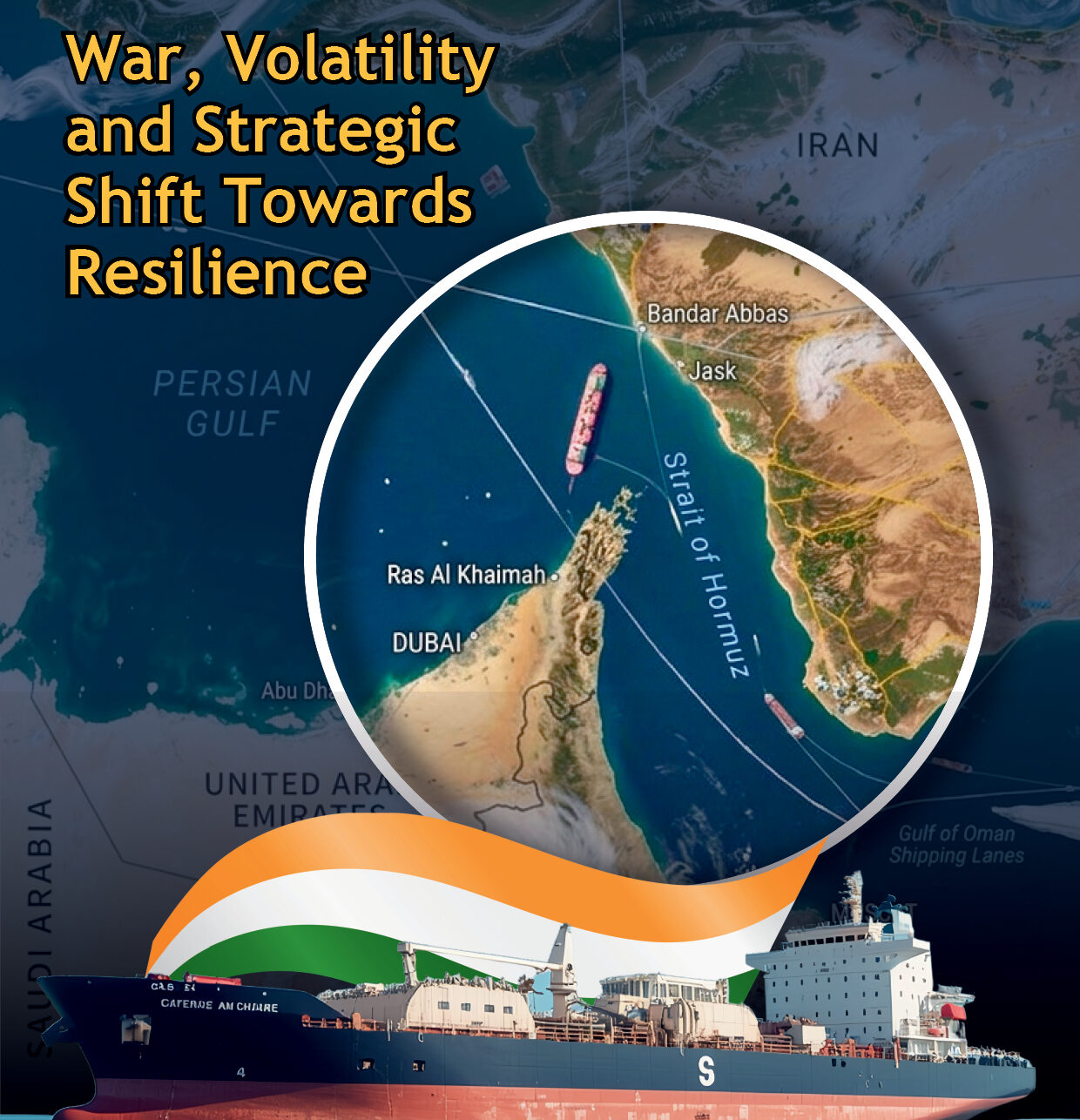
In today’s global landscape, energy has moved beyond a commodity. It now shapes influence, leverage, and national security.
Recent conflicts in Europe and West Asia have disrupted global energy systems. Supply chains remain unstable, and long-standing assumptions face serious challenges. As a result, energy has become a central pillar of national security.
For India, the impact has been immediate and far-reaching. The challenge is not only securing energy, but securing it reliably, affordably, and sustainably.
India’s Energy Reality: Growth Meets Dependency
India’s development depends heavily on energy consumption. As urbanisation accelerates, demand for reliable and affordable energy continues to rise.
Estimates suggest that India’s energy demand could double by 2040. This growth creates pressure on infrastructure and resource availability.
Currently, the energy mix remains dominated by fossil fuels, especially coal. While this ensures stability and affordability, it also exposes the economy to environmental and global risks.
Therefore, India faces a dual challenge:
- Reducing import dependence
- Transitioning to cleaner energy without slowing growth
War and the Weaponisation of Energy
Global conflicts have reshaped energy flows. Supply disruptions, sanctions, and price shocks have forced nations to rethink dependencies.
India imports over 85% of its crude oil. This makes the country highly sensitive to global volatility. However, India has responded with agility and pragmatism.
The government has expanded sourcing networks and strengthened diplomatic ties. It has also focused on protecting consumers while maintaining economic stability.
India’s Energy Vision: Policy Anchored in Resilience
India’s strategy reflects a balance between immediate needs and long-term goals. Energy security remains central to economic sovereignty.
Prime Minister Narendra Modi has emphasised that India’s energy journey is about leadership, not just consumption. The focus is on building a system that supports both national growth and global contribution.
This vision promotes a shift from centralised systems to more distributed participation. It also highlights the importance of public empowerment in energy transition.
Diversification of Energy Sources
One of India’s strongest responses has been diversification. The country has expanded crude sourcing and reduced dependence on single regions.
Strategic petroleum reserves now act as buffers against supply shocks. This approach strengthens both supply security and pricing stability.
Accelerated Renewable Energy Expansion
India has made significant progress in renewable energy. The country has achieved over 217 GW of non-fossil fuel capacity.
Solar energy, in particular, has grown rapidly. Large-scale projects, policy support, and declining costs have driven this expansion.
Key initiatives include:
- National Solar Mission
- PM Surya Ghar: Muft Bijli Yojana
- PM-KUSUM Scheme
These efforts have improved access to clean energy, especially in rural areas. As a result, India is emerging as a global leader in clean energy adoption.
The Green Hydrogen Push
India is also investing in emerging technologies like green hydrogen. The National Green Hydrogen Mission aims to position India as a global hub.
This initiative supports decarbonisation in industries such as steel, cement, and transport. It reflects a long-term vision for sustainable energy systems.
Balancing Transition with Stability
Despite rapid renewable growth, India continues to rely on coal. This ensures grid stability and supports industrial demand.
Rather than abrupt transitions, India follows a calibrated approach. It focuses on gradual change, efficiency improvements, and cleaner technologies.
The Overlooked Crisis: LPG and Household Impact
India is the world’s second-largest LPG consumer. Schemes like Ujjwala Yojana have expanded access significantly.
However, rising refill costs now affect consumption, especially among low-income households. This raises concerns about a return to traditional fuels.
The LPG challenge highlights issues of affordability, supply chain dependence, and energy equity.
Persistent Structural Challenges
India’s energy transition faces multiple constraints. These include infrastructure gaps, financial stress, and policy inconsistencies.
Transmission capacity has not always matched renewable growth. Grid congestion and delays remain key concerns.
At the same time, DISCOMs continue to face financial pressure. Tariff structures and operational inefficiencies add to the challenge.
Policy uncertainty at the state level also affects investor confidence. Therefore, consistent execution becomes critical.
The Way Forward: From Expansion to Optimisation
India’s energy journey is entering a new phase. The focus must now shift from expansion to optimisation.
Key priorities include:
- Strengthening energy independence
- Investing in grid modernisation and storage
- Reforming subsidy mechanisms
- Enhancing household energy security
- Scaling green hydrogen initiatives
- Encouraging private sector participation
- Improving centre-state coordination
Conclusion: From Crisis to Strategic Leadership
The global energy crisis has forced nations to rethink priorities. For India, this moment offers both challenge and opportunity.
The country must manage price volatility, supply disruptions, and rising demand. At the same time, it must build a resilient and sustainable energy ecosystem.
India’s emerging strategy balances:
- Growth with sustainability
- Access with affordability
- Ambition with realism
If executed effectively, India’s model could guide other developing economies.
Energy is no longer just a sector. It is a national imperative. And in responding to it, India is not only securing its future, but shaping it.
Check out the April Issue in our magazine section to read the other stories.