
The implementation of the India-EFTA Trade and Economic Partnership Agreement (TEPA) marks a major milestone in India’s evolving economic diplomacy. At a time when nations are looking to diversify supply chains, strengthen trade partnerships, and attract long-term investment, the agreement has emerged as a significant step towards deeper economic integration between India and Europe.
Bringing together India and the four member countries of the European Free Trade Association (EFTA)—Iceland, Norway, Switzerland, and Liechtenstein—the agreement goes far beyond conventional trade liberalisation. It creates a framework for collaboration in investment, technology, innovation, sustainability, education, and industrial development. More importantly, it reflects a shared vision of long-term economic growth built on trust, mutual benefit, and strategic cooperation.
Implemented on October 1, 2025, the agreement is India’s first comprehensive trade pact with a bloc of developed European economies. One of its most remarkable features is EFTA’s commitment to facilitate USD 100 billion in investments into India over the next fifteen years, with the potential to generate nearly one million direct jobs. As implementation gains momentum, businesses on both sides are increasingly viewing the agreement as a gateway to new opportunities.
What is the India-EFTA TEPA?
The Trade and Economic Partnership Agreement (TEPA) was signed on March 10, 2024, after nearly sixteen years of negotiations. While trade agreements often focus on reducing tariffs and improving market access, TEPA adopts a much broader approach. It seeks to create a long-term framework that supports investment, innovation, knowledge sharing, technology transfer, and sustainable development.
For India, the agreement opens doors to some of Europe’s most advanced economies while providing access to valuable expertise, capital, and technology. For EFTA nations, it offers opportunities within one of the world’s fastest-growing major economies and a rapidly expanding consumer market. The agreement also strengthens supply chain integration between Europe and South Asia, making economic cooperation more resilient and future-ready.

Why the India-EFTA Trade Agreement Matters
The significance of the India-EFTA TEPA lies in its ability to create benefits that extend beyond traditional trade flows. It brings together economies with complementary strengths and creates a platform for deeper collaboration across high-growth sectors. Businesses, investors, researchers, educational institutions, and policymakers all stand to benefit from the opportunities it creates.
Indian companies operating in information technology, pharmaceuticals, engineering goods, textiles, chemicals, food processing, gems and jewellery, and professional services are expected to gain improved access to European markets. At the same time, EFTA businesses can leverage India’s manufacturing capabilities, skilled workforce, and growing domestic demand to expand their global operations.
The agreement also arrives at a time when global economic dynamics are shifting. Companies are actively seeking reliable partners, diversified markets, and stable investment destinations. In this context, TEPA provides a framework that can support long-term growth while strengthening economic resilience on both sides.
The Unique Strengths of the EFTA Nations
One of the most compelling aspects of the agreement is the diverse expertise that each EFTA member brings to the partnership. Together, these countries offer strengths that align closely with India’s development priorities and economic ambitions.
Iceland: A Leader in Renewable Energy and Sustainability
Iceland has earned global recognition for its achievements in geothermal energy, climate resilience, fisheries management, sustainable tourism, and Arctic research. Its expertise offers valuable lessons for India as it accelerates its transition towards cleaner energy and sustainable development.
Regions such as Ladakh and several Himalayan states could particularly benefit from collaboration in renewable energy technologies and climate-resilient infrastructure. The growing emphasis on sustainability within both countries creates a strong foundation for future cooperation.
Norway: Advancing the Blue Economy and Green Growth
Norway’s expertise spans maritime industries, offshore energy, aquaculture, green shipping, and sustainability. These capabilities align closely with India’s ambitions in developing a strong blue economy while accelerating its transition towards cleaner energy systems.
As India continues to invest in ports, logistics, renewable energy projects, and maritime infrastructure, Norway’s experience could support innovation, investment, and knowledge exchange in several strategic sectors.

Switzerland: Innovation, Finance and Advanced Manufacturing
Switzerland remains India’s largest trading partner within the EFTA bloc and brings significant strengths in financial services, pharmaceuticals, medical technology, precision engineering, advanced manufacturing, research, and innovation.
The India-EFTA TEPA is expected to create new opportunities for collaboration between businesses, research institutions, and investors. Greater engagement in these sectors could contribute significantly to technological advancement and industrial competitiveness in both economies.
Liechtenstein: Small Nation, Global Industrial Expertise
Despite its relatively small size, Liechtenstein has built a strong reputation in advanced manufacturing, specialised engineering, industrial technologies, and high-value financial services. Its innovative SME ecosystem presents unique opportunities for collaboration with Indian enterprises seeking access to specialised technologies and niche global markets.
The agreement creates a platform through which Indian businesses can engage with highly specialised industries that may otherwise have remained difficult to access.
Momentum Builds After TEPA Implementation
Since the agreement became operational in October 2025, both India and the EFTA nations have moved quickly to translate policy commitments into action. Investment facilitation mechanisms have been established, business delegations have increased, and sector-specific discussions are gaining momentum across industries.
Conversations are already expanding into areas such as clean energy, healthcare, fintech, education, advanced manufacturing, and sustainability. A dedicated framework is also being developed to monitor and facilitate the landmark investment commitments envisioned under the agreement.
This early momentum reflects growing confidence among businesses and investors. Companies across the EFTA region are showing increasing interest in India’s growth story, while Indian enterprises are beginning to view EFTA nations as valuable gateways to innovation, technology partnerships, and wider European market access.
Turning Agreement into Action: The IIBA Business Delegation
Recognising the historic opportunities created by TEPA, the Indo Icelandic Business Association (IIBA) organised and led a 32-member business delegation to the EFTA region. The initiative demonstrated how industry stakeholders are actively working to convert the agreement’s potential into practical outcomes.
The delegation included representatives from technology, healthcare, education, infrastructure, sustainability, fintech, tourism, manufacturing, legal services, entrepreneurship, and gems and jewellery. Rather than limiting discussions to policy matters, the mission focused on creating real business partnerships, investment opportunities, and collaborative ventures.

India-Iceland Business Conclave Highlights Growing Interest
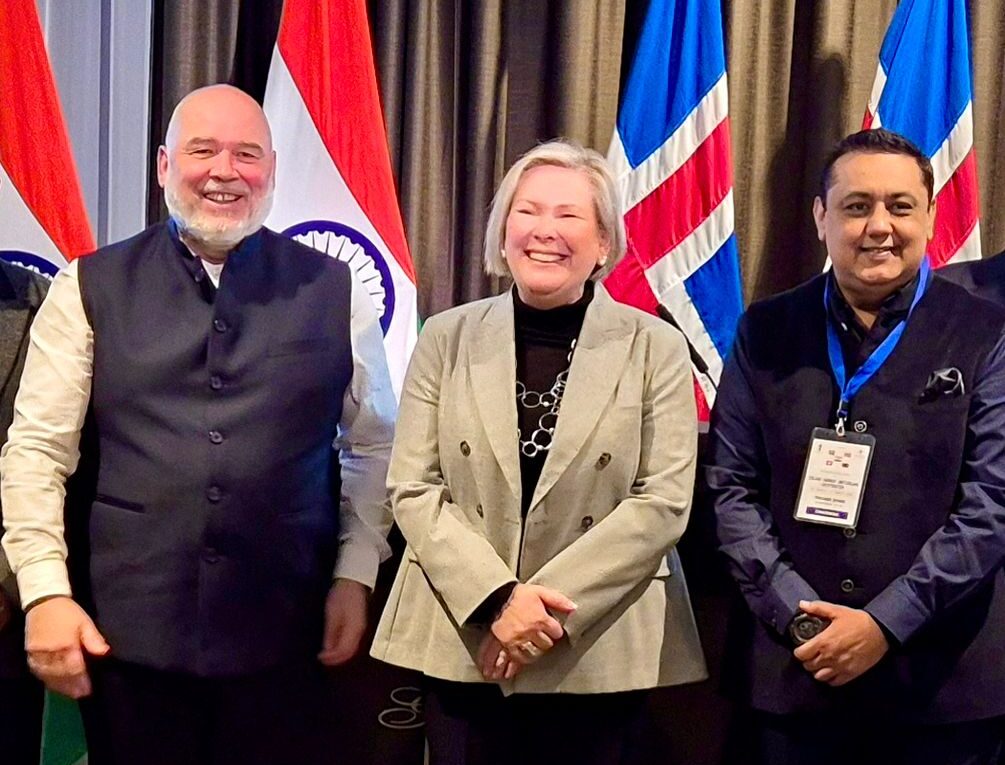
A major highlight of the visit was the India-Iceland Business Conclave held in Reykjavík. Chaired by Icelandic President Halla Tómasdóttir, the event brought together policymakers, business leaders, entrepreneurs, and innovators from both countries.
Hosted by the Embassy of India in Iceland under Ambassador R. Ravindra, the conclave reflected the growing importance attached to India-Iceland economic relations. Discussions covered renewable energy, healthcare, fintech, education, tourism, sustainability, and investment opportunities, showcasing the breadth of cooperation possible under the TEPA framework.
The participation of senior leaders and industry stakeholders demonstrated a strong commitment to deepening economic engagement and identifying practical areas for collaboration.
Strengthening India-Norway Economic Cooperation
The delegation’s engagement in Norway further reinforced the growing momentum behind the agreement. The Embassy of India in Norway, under Ambassador Gloria Gangte, hosted a successful business networking and cooperation event in Oslo that brought together entrepreneurs, investors, policymakers, and business leaders from both countries.
The discussions focused on sectors where Norway possesses significant expertise, including maritime industries, renewable energy, sustainability, and innovation. Participants also explored opportunities to strengthen investment flows and build partnerships that can generate long-term economic value.
The strong participation from both Indian and Norwegian stakeholders reflected a shared determination to ensure that the opportunities created by TEPA translate into measurable business outcomes.
The Future of India-EFTA Economic Relations
The India-EFTA Trade and Economic Partnership Agreement represents a modern model of economic cooperation. It is based not only on trade liberalisation but also on investment, innovation, sustainability, and shared prosperity. At a time when global economies face increasing uncertainty, such partnerships provide stability and create new pathways for growth.
For India, the agreement opens access to some of Europe’s most advanced economies while supporting ambitions related to industrial development, innovation, job creation, and foreign investment. For EFTA nations, it creates opportunities in one of the world’s most dynamic and rapidly expanding markets.
The foundations have now been laid, but the real success of TEPA will depend on continued engagement from governments, businesses, educational institutions, and industry organisations. Early developments suggest that this process is already underway.
Ultimately, the India-EFTA TEPA is more than a trade agreement. It is a bridge connecting innovation, enterprise, investment, and international cooperation. As implementation progresses, it has the potential to become one of the most important pillars of India-Europe economic relations in the years ahead.