
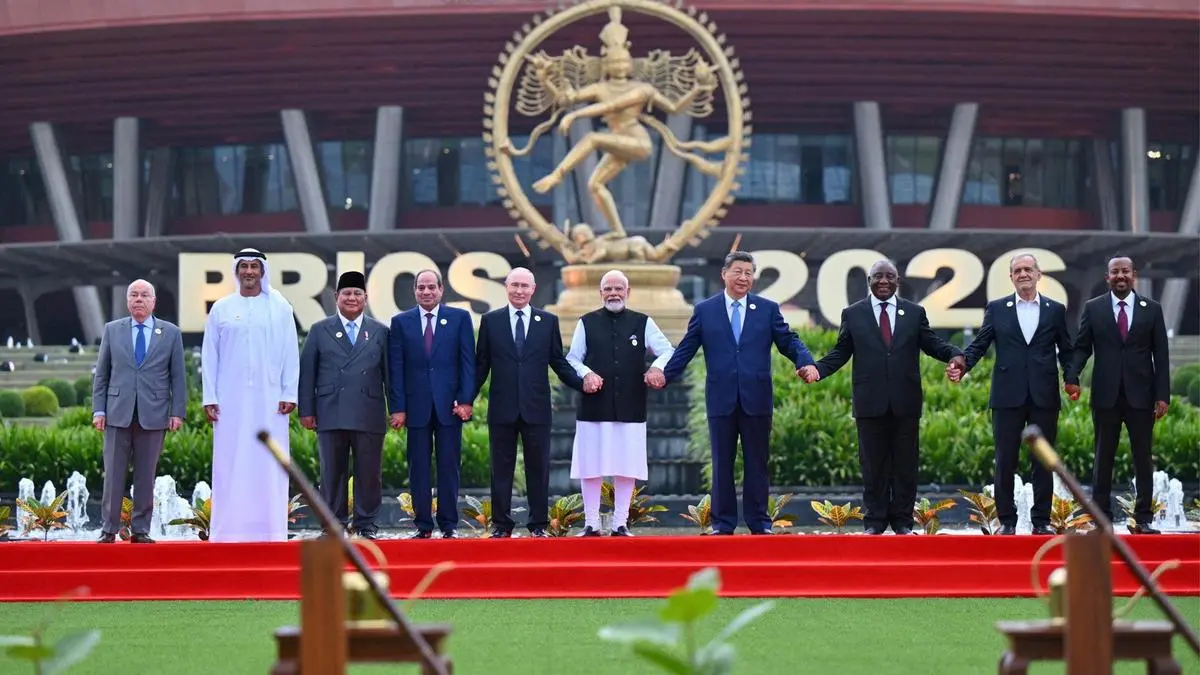
The BRICS Summit 2026 Leaders drew global attention as New Delhi welcomed presidents, prime ministers, foreign ministers, and representatives from BRICS member countries, partner nations, and international organisations. Held under India’s presidency, the 18th BRICS Summit brought together influential decision-makers to discuss global governance, trade, artificial intelligence, climate action, security, and reforms of international institutions.
While the summit’s agenda focused on strengthening cooperation among emerging economies, the arrival of several prominent leaders also underscored India’s growing diplomatic influence. Moreover, the gathering reflected BRICS transformation into a broader platform representing much of the Global South.
Day 1: Leaders Who Arrived Before the Summit
The first day saw a steady stream of high-profile arrivals in New Delhi. These leaders participated in bilateral meetings, preparatory discussions, and official engagements before the formal summit sessions began.
Among the most closely watched arrivals were:
- Vladimir Putin — President of Russia
- Cyril Ramaphosa — President of South Africa
- Masoud Pezeshkian — President of Iran
- Abdel Fattah el-Sisi — President of Egypt
- Abiy Ahmed — Prime Minister of Ethiopia
- Prabowo Subianto — President of Indonesia
- Sheikh Khaled bin Mohamed bin Zayed Al Nahyan — Crown Prince of Abu Dhabi, UAE
- Anwar Ibrahim — Prime Minister of Malaysia
- Jessica Alupo — Vice President of Uganda
- Kashim Shettima — Vice President of Nigeria
- António Guterres — United Nations Secretary-General
- Dilma Rousseff — President of the New Development Bank (NDB)
Their early arrival allowed India to begin a series of bilateral engagements even before the summit officially commenced. Consequently, the first day became an important diplomatic platform rather than merely an arrival schedule.
Day 2: Xi Jinping’s Arrival Took Centre Stage
The second day witnessed one of the summit’s most anticipated moments with the arrival of Chinese President Xi Jinping. His visit to India marked his first trip to the country in seven years, making it one of the most closely followed developments of the summit.
Besides Xi Jinping, several other leaders and representatives also arrived on Day 2, including:
- Kassym-Jomart Tokayev — President of Kazakhstan
- Le Minh Hung — Prime Minister of Vietnam
- Maxim Ryzhenkov — Foreign Minister of Belarus
- Dr. Abdullatif bin Rashid Al Zayani — Foreign Minister of Bahrain
Xi Jinping later joined other leaders for the official sessions and the traditional BRICS family photograph. His bilateral meeting with Prime Minister Narendra Modi also attracted international attention because of its significance for India-China relations.
Why These Leaders Matter
The BRICS Summit 2026 Leaders represented countries that collectively account for nearly half of the world’s population and a significant share of global economic output. Following BRICS’ expansion, the summit now includes emerging economies from Asia, Africa, the Middle East, and Latin America, making it one of the largest platforms for South-South cooperation.
Each leader brought distinct priorities to the discussions. Russia focused on strategic partnerships and trade, while China advocated deeper economic cooperation and multilateral reform. Iran highlighted regional stability, and African leaders emphasised development financing, infrastructure, and greater representation in global institutions. Meanwhile, India continued to position itself as a bridge between developed and developing economies.
Beyond BRICS Members
The summit extended well beyond the core BRICS countries. Partner nations, observer states, outreach invitees, and international organisations also participated, reflecting the bloc’s expanding global influence. The presence of the United Nations, the World Health Organization, the New Development Bank, and leaders from Southeast Asia, Central Asia, and Africa broadened the scope of discussions beyond traditional BRICS cooperation.
This wider participation demonstrated how BRICS is increasingly becoming a platform for addressing global challenges, including climate change, digital governance, public health, financial reforms, and sustainable development.
A Summit That Reflected India’s Diplomatic Reach
Hosting such a diverse group of leaders reinforced India’s role as an important voice of the Global South. Beyond formal summit sessions, Prime Minister Narendra Modi held an extensive series of bilateral meetings, using the gathering to strengthen strategic partnerships across multiple regions.
The successful participation of leaders from BRICS members, partner countries, and international institutions also highlighted the bloc’s growing geopolitical relevance. As global power dynamics continue to evolve, forums like BRICS are becoming increasingly important for shaping conversations on economic cooperation, security, and multilateral governance.