
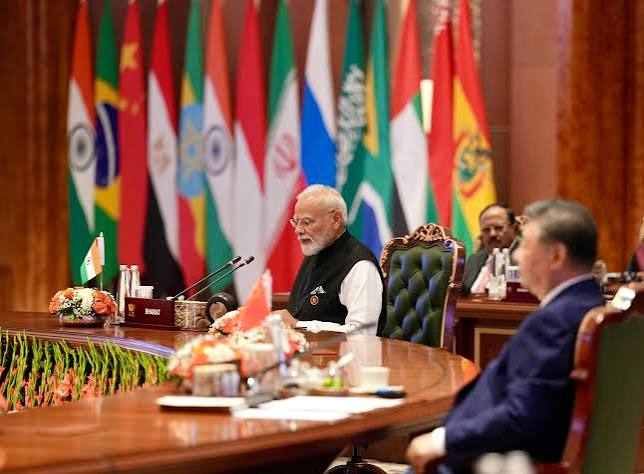
The BRICS Delhi Declaration 2026 emerged as the most significant outcome of the 18th BRICS Summit hosted by India. Adopted by member countries after two days of deliberations, the declaration outlines a shared vision on global governance, economic cooperation, artificial intelligence, climate action, public health, security, and sustainable development. More importantly, it reflects BRICS’ growing ambition to play a larger role in shaping the international order.
While the summit brought together world leaders from across the Global South, the declaration became the roadmap for future cooperation. It highlights common priorities while proposing practical steps to strengthen collaboration among member countries.
A Strong Call for Global Governance Reforms
One of the declaration’s central themes is the reform of international institutions.
BRICS leaders reiterated that global governance structures should better reflect today’s geopolitical and economic realities. They renewed their support for comprehensive reforms of the United Nations, including the Security Council, to make it more representative, effective, and responsive.
The declaration also recognised the aspirations of developing countries to have a stronger voice in international decision-making. Consequently, BRICS positioned itself as an advocate for a more balanced and inclusive global order.
Artificial Intelligence Takes Centre Stage
Artificial intelligence received unprecedented attention during the summit.
Recognising AI’s growing influence on economies and societies, the BRICS Delhi Declaration 2026 called for responsible, inclusive, and human-centric AI governance. Leaders agreed that technological innovation should promote development while protecting privacy, security, and ethical standards.
The declaration also encouraged greater cooperation in research, digital infrastructure, capacity building, and knowledge sharing. As AI continues to transform industries, BRICS members stressed the importance of ensuring that developing nations are not left behind.
Expanding Economic Cooperation
Economic collaboration remained one of BRICS’ highest priorities.
The declaration reaffirmed the bloc’s commitment to strengthening trade, investment, financial cooperation, and supply chain resilience. It also encouraged greater use of national currencies in cross-border transactions wherever appropriate.
Furthermore, leaders emphasised the importance of improving connectivity, supporting innovation, and promoting sustainable industrial growth. These measures aim to create stronger economic partnerships among member countries while reducing vulnerabilities in global markets.
Climate Action and Sustainable Development
Climate change featured prominently throughout the discussions.
The declaration reaffirmed support for the Paris Agreement while recognising the principle of common but differentiated responsibilities. Leaders stressed that climate action should remain equitable and should consider the development needs of emerging economies.
In addition, BRICS members committed to increasing cooperation in renewable energy, green technologies, sustainable agriculture, and disaster resilience. They also called for improved climate finance and easier access to green technologies for developing countries.
Public Health and Pandemic Preparedness
The COVID-19 pandemic highlighted the importance of international health cooperation. As a result, BRICS leaders placed renewed emphasis on strengthening public health systems.
The declaration supports greater collaboration in vaccine research, disease surveillance, digital health, pharmaceutical manufacturing, and emergency preparedness. It also encourages stronger partnerships among public health institutions to improve future responses to global health emergencies.
A Collective Stand Against Terrorism
Security remained another important pillar of the declaration.
BRICS leaders strongly condemned terrorism in all its forms and reaffirmed that there can be no justification for terrorist activities. They called for greater international cooperation to combat terrorism, terrorist financing, radicalisation, and organised crime.
The declaration also highlighted the importance of respecting international law while strengthening cooperation against emerging security threats, including cybercrime and transnational criminal networks.
Strengthening the New Development Bank
The New Development Bank continues to play a key role in financing infrastructure and sustainable development projects across BRICS countries.
Through the BRICS Delhi Declaration 2026, leaders reaffirmed their support for the bank and encouraged it to expand financing for projects that promote inclusive growth, climate resilience, and sustainable infrastructure.
The declaration also recognised the bank’s contribution to providing alternative sources of development finance for emerging economies.
Why the Delhi Declaration Matters
The BRICS Delhi Declaration 2026 is more than a diplomatic document. It provides a strategic framework that will guide cooperation among member countries in the coming years.
Unlike earlier declarations that primarily focused on economic cooperation, this document addresses a much broader range of global challenges. It reflects BRICS’ growing role in discussions on technology, security, climate policy, global health, and institutional reform.
Furthermore, the declaration demonstrates that developing economies are increasingly seeking a stronger role in shaping international policies rather than simply responding to them.
Looking Ahead
The true impact of the BRICS Delhi Declaration 2026 will depend on how effectively its commitments are implemented. Many of the initiatives announced during the summit will require sustained cooperation among governments, financial institutions, businesses, and research organisations.
Nevertheless, the declaration sends a clear message that BRICS intends to strengthen cooperation across multiple sectors while promoting a more inclusive and representative global order.
As the bloc continues to expand, the decisions taken in New Delhi are likely to influence discussions on trade, technology, climate action, development finance, and global governance for years to come.